
Key Points
- Rusty hot water with clear cold water usually means water heater problems.
- A deteriorating anode rod is the most common cause of rusty hot water in traditional tanked water heaters.
- Sediment buildup from hard water at the bottom of your water heater tank speeds up corrosion and produces discolored water.
- Brown or orange water can come from corroded galvanized pipes or municipal water supply issues.
- Regular water heater maintenance with Spencer Home Services, including heater flush services and anode rod replacement, prevents water discoloring issues.
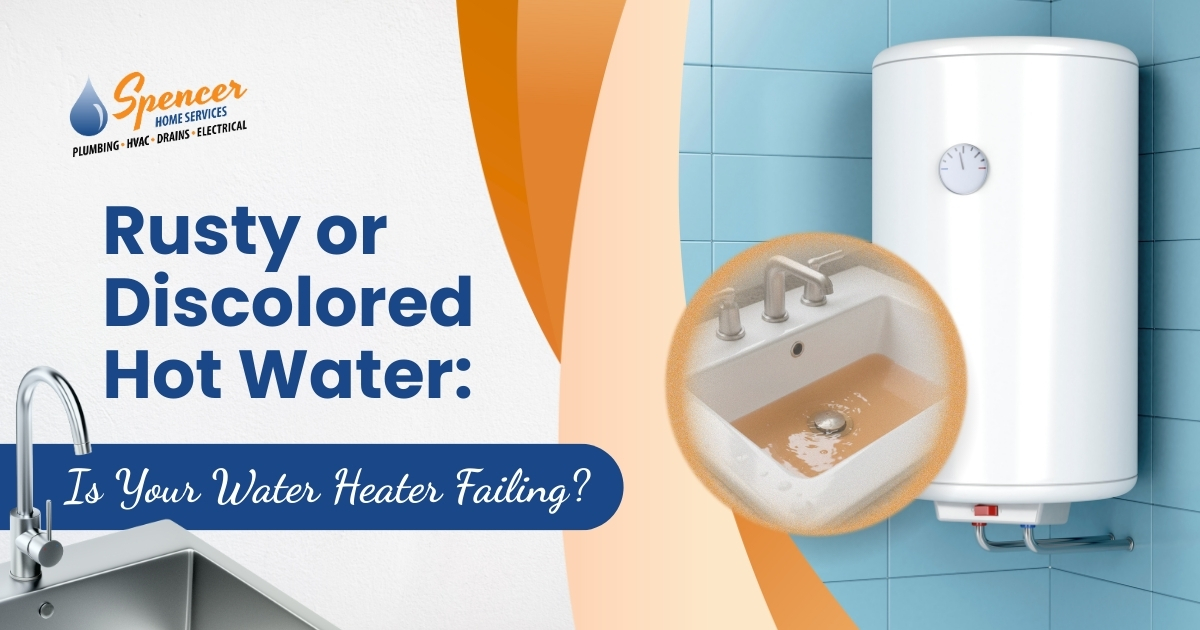
Turning on your hot water for a shower or your morning coffee and finding rusty or discolored water is an alarming sight. It also signals that something is seriously wrong with your plumbing system or water quality, or both. If you’re experiencing rusty hot water while your cold water runs clear, you’re most likely dealing with a water heater issue that needs attention. Spencer Home Services has been helping Peabody and North Shore, MA, homeowners address water discoloration for over 40 years.
Why Hot Water Turns Rusty or Discolored
When water appears rusty, you’re seeing rust particles or iron oxide clinging to the water. These particles come from corroding metal somewhere in your plumbing system.
The discoloration occurs when iron or steel components begin to flake off and mix with your water supply. Occasionally, the water appears cloudy rather than rusty, indicating your water tank is likely filled with sediment.
Occasional rust in water that clears up after running for a minute or two may indicate disturbances in the municipal water supply, scheduled utility work, pressure changes, or sediment in the water mains. However, if your water is consistently discolored, especially first thing in the morning or after the water heater hasn’t been used for several hours, it indicates an internal issue that requires professional assistance from Spencer Home Services.
Spencer Home Services is your trusted local team for plumbing, drain, and sewer services, delivering same-day service and expert repairs.
Common Water Heater Problems That Cause Rusty Hot Water
There are different parts of a water heater that can begin to corrode and lead to rusty-colored water:
- Anode rods: An anode rod is a critical metal rod (typically magnesium, aluminum, or zinc) that sacrificially corrodes to prevent corrosion in the tank. When these deteriorate, the tank corrodes, causing rusty water from the water heater.
- Tank corrosion: When the anode rod fails and can no longer protect the tank, the interior begins to rust. Tank corrosion is prevalent in water heaters approaching 10–12 years and means they need to be replaced.
- Sediment buildup: Over time, minerals in the water settle to the bottom of the water heater tank, forming a thick layer. Sediment usually contains rust particles.
- Heating elements: In electric water heaters, heating elements do corrode over time, particularly if the anode rod has failed or sediment has built up around them, causing that rusty color in your hot water.
Plumbing Issues Causing Discolored Hot Water
Although water heater problems are typically responsible for hot water discoloration, other plumbing issues in your home can also lead to similar symptoms:
- Galvanized pipes: Many older homes in Peabody, Salem, MA, and surrounding North Shore areas were built with iron pipes coated with zinc to protect against corrosion. As the zinc coating wears away, the underlying metal corrodes, producing rust in the water.
- Municipal water issues: If the utility company performs maintenance on water mains or repairs broken lines, sediment and rust particles from municipal pipes can enter your home’s plumbing.
- Pipe connections: Even with new copper pipes, corrosion can occur through a process called “galvanic corrosion.” If you connect the new copper pipe to a different metal, it may corrode more quickly.
How To Troubleshoot Rusty Water at Home
Before calling a plumber, do the following:
- Test hot and cold: If you run cold water through multiple taps throughout the house and it’s clear, the problem is most likely with your water heater.
- Test different fixtures: If rust appears at any hot-water location, the water heater is likely the source. If discoloration occurs at only one fixture, that specific faucet or the supply line may be corroded.
- Run water and check whether the rusty color runs out: Let the rusty hot water run for several minutes. If the water quickly clears and runs clean, a period of inactivity may have caused sediment buildup.
- Check your water heater’s age: If it is approaching the 8- to 12-year lifespan, it may be time to replace it.
- Listen for popping sounds: Rumbling, popping, or crackling from your water heater indicates sediment buildup at the bottom of the tank. This signals that your tank needs to be flushed by a pro.
How To Prevent Rusty Hot Water in the Future
Prevention is the easiest way to ensure your hot water runs clear. Follow this list of tips:
- Replace your anode rod every 3 to 5 years: This will maintain your water heater’s lifespan. If you’re not sure how to replace the anode rod, call a professional plumber.
- Flush your tank: Sediment buildup happens, but a regular heater flush service removes minerals before they cause problems. Annual flushing is ideal, though homes with hard water or high mineral content may benefit from semi-annual service.
- Install a whole-home water filtration system or a water softener: These systems remove minerals that cause sediment buildup and accelerate corrosion.
- Upgrade to a tankless system: Tankless systems deliver instant hot water, and while they still can accumulate sediment, they are easier to clean and are less prone to corrosion than conventional tanks.
Clear Your Rusty Water With Spencer Home Services
If you’re experiencing consistently rusty water, don’t ignore it. Addressing the issue promptly will prevent it from becoming an expensive headache. Whether it is caused by a deteriorating anode rod, sediment buildup, interior tank corrosion, or aging galvanized pipes, Spencer Home Services can restore it quickly. Call us today to book a consultation and clear your water. For a service that can’t be beat, call Pete!
Frequently Asked Questions
Does brown water mean pipes need replacing?
Not all the time. Brown water from hot taps usually indicates a water heater issue rather than a pipe problem. However, if both hot and cold water are discolored throughout your home, you may have corroded galvanized pipes that need replacement.
Is rusty water dangerous to drink?
Rusty water isn’t typically dangerous to drink in small amounts, but it indicates plumbing issues that require attention. It also stains clothes, dishes, and fixtures.
Should I drain the tank if the water is rusty?
Draining the tank can help, but it won’t fix the underlying problem. If sediment buildup is causing the rusty water, flushing the tank completely may temporarily improve water quality. Still, if the cause is something else, such as a failing anode rod, the rust will return.
How much does it cost to replace an anode rod?
Anode rod replacement typically costs $200 to $400 when performed by a licensed plumber. The best thing to do is sign up for routine heater maintenance so a plumber can catch a deteriorating anode rod before it becomes a problem.
Is the water in Essex County, MA, considered hard?
Most of Essex County’s water is soft, but a few areas, such as Lowell, MA, have slightly hard water. Refer to the Massachusetts Water Hardness chart to determine your water hardness level.