Key Points
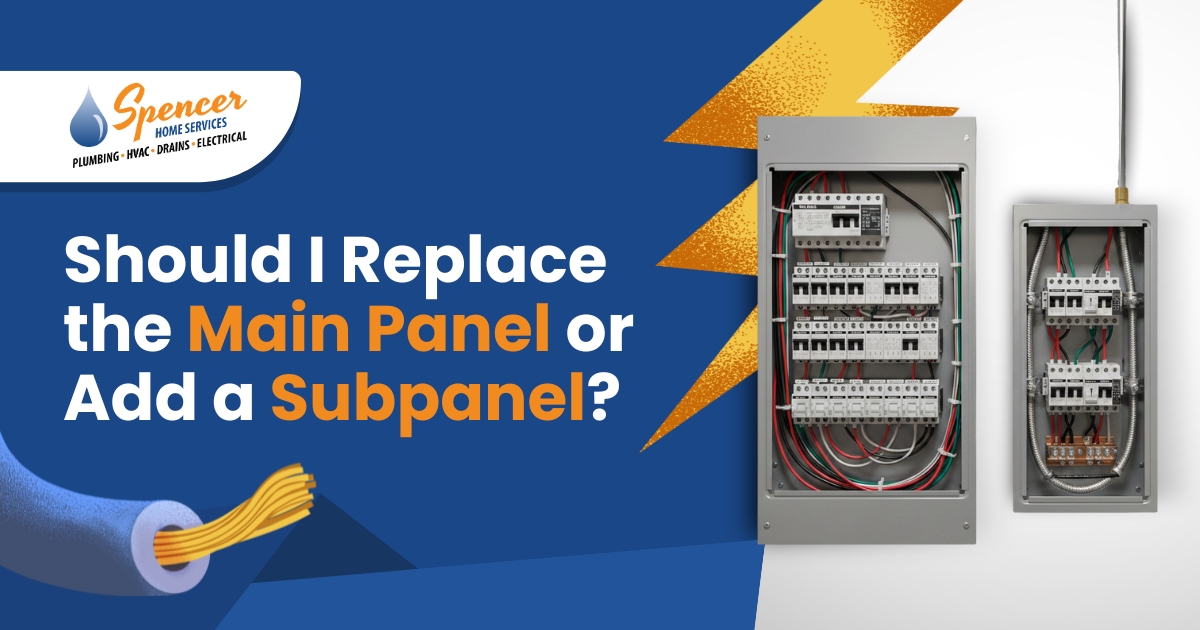
- A main electrical panel sets the total electrical capacity for your home, while a subpanel adds circuit space without increasing available power.
- Homes with high electrical demands and outdated panels often require a full electrical panel upgrade rather than a subpanel addition.
- Subpanels may be a better option when the main panel’s capacity is adequate but has limited circuit space.
- Local codes, home age, and future plans impact your choice between a subpanel vs. a main panel upgrade.
Whether breakers trip frequently, appliances are underpowered, or there’s no more breaker space for home upgrades, many homeowners eventually max out their existing electrical panel. This is an increasingly common experience as modern homes add electric vehicle chargers, heat pumps, kitchen upgrades, and other devices with high wattage demands. Deciding whether an electrical panel upgrade makes sense for your home depends on current usage, future plans, and local Peabody electrical code requirements.
What Is a Main Electrical Panel?
The main electrical panel, sometimes referred to as the circuit breaker box, is the central hub that receives power from utility lines and distributes it to circuits throughout your home. These circuits supply electricity to lighting, outlets, appliances, HVAC equipment, and other electrical devices or appliances.
Because the main panel determines the total capacity for the entire home, its size and condition directly affect safety, performance, and expansion options. While older homes were built with 60-amp or 100-amp panels, 200-amp panels are now standard for modern homes and higher electrical loads. Many older panels also lack space for modern breakers required by current electrical codes.
What Is a Subpanel?
Main electrical panels are standard in homes, but subpanels are an optional addition. A subpanel is a secondary housing component that receives power from the main panel and distributes it to a specific area of your home. Homeowners often add subpanels to garages, finished basements, workshops, or additions to improve access and organization.
A subpanel increases the number of circuits available, but it doesn’t increase the total electrical capacity of the home since it draws power from the main panel. Proper installation requires correct breaker sizing, grounding separation, and compliance with local electrical codes.
When You Should Choose a Main Electrical Panel Upgrade
A main electrical panel upgrade may be the right choice if your home’s overall electrical demand exceeds what your existing panel can safely handle. Household appliances and devices for electricity for heating, cooling, cooking, and transportation have increasingly higher wattage requirements, and they’ve made 200-amp panels standard for reliable performance. Although upgrading your main panel is an investment, it allows your electric car charging system to operate reliably and safely while accommodating future electrical demand.
Reasons to upgrade include:
- Increasing electrical capacity: A panel upgrade increases the total amperage available to your home, allowing systems such as EV chargers, heat pumps, high-efficiency HVAC equipment, tankless water heaters, induction ranges, and electric dryers to operate at the same time without exceeding panel limits.
- Planning for future renovations and load demand: A higher-capacity panel makes it easier to incorporate future additions, remodels, and new electrical equipment as household needs change, reducing the need for repeated electrical modifications.
- Improve electrical safety: Modern panels allow proper installation of AFCI and GFCI breakers, which interrupt power during arc faults or ground faults that cause electrical fires or shocks.
- Replacing an outdated electrical panel: Replacing panels that don’t meet modern electrical loads or code requirements lowers the risks associated with outdated equipment, such as surge damage to appliances and devices, frequent breaker trips, overheating and damaged circuits, and electrical fire hazards.
When Adding a Subpanel Makes the Most Sense
As a branch of your main panel, a subpanel can make it more convenient and safe to distribute power throughout your home. Subpanels may cost less than an electrical panel upgrade and may improve electrical layout organization and availability. Homeowners often opt for a subpanel over an upgrade when their existing electrical panel has sufficient capacity but lacks the space for additional circuits and breakers.
Reasons to add a subpanel include:
- Manage power safely in specific areas: A subpanel enables dedicated circuits for certain spaces, such as additions, garages, or workshops, reducing the chance of overloading shared circuits on the main panel.
- Conveniently access breakers: Subpanels can be installed almost anywhere in your home, and a subpanel near garages, workshops, finished basements, or additions allows for more convenient access in those areas.
- Organization: Grouping related circuits in one subpanel makes it easier to isolate maintenance or repair needs.
Peabody, MA Electrical Codes & Safety Considerations
Local electrical codes influence installation requirements and may impact your choice between a main electrical panel upgrade and a subpanel addition. Many Peabody and North Shore homes, especially in areas near Route 114, West Peabody, and downtown Peabody, still have 60-amp and 100-amp electrical panels and limited breaker space. Older properties across Essex County frequently have limited circuit space, hazardous cloth-insulated wiring, and aluminum branch circuits, which may not safely accommodate subpanel installations. These safety considerations may point toward an electrical panel.
Regardless of your choice, it’s important to refer to a licensed electrician for your upgrades and installations. Without expert knowledge, improper installations create fire hazards, inspection failures, and insurance complications. Licensed electricians evaluate your entire electrical system and plan your installation according to load calculations and code compliance. A comprehensive electrical inspection provides clear guidance and prevents costly corrections later.
Upgrade Your Electrical System With Spencer Home Services
Choosing between a subpanel versus a main panel upgrade depends on your home’s electrical circuit needs. At Spencer Home Services, we help homeowners make informed decisions with comprehensive inspections, clear explanations, and warranty-backed workmanship. Contact us to schedule same-day services and get guidance tailored to your home and local code requirements.
Frequently Asked Questions
How do I know if I need a panel upgrade?
You may need a panel upgrade if breakers trip frequently, the panel lacks space for required new circuits, or you plan to add high-demand equipment like EV chargers or heat pumps. A licensed electrician can complete a load calculation to compare your home’s demand with your panel’s capacity.
Can I install a subpanel myself?
Installing a subpanel requires advanced electrical knowledge, proper grounding, and strict code compliance. Without professional knowledge, DIY installation significantly increases the risk of fire hazards, failed inspections, and insurance issues. In Massachusetts, code compliance generally requires permits and a licensed electrician to complete the installation.
Can I have both a main panel upgrade and a subpanel?
Many homes benefit from both a main panel upgrade and a subpanel addition. A main panel upgrade increases total electrical capacity, while a subpanel improves circuit organization and access in specific areas. This combination works well for larger homes, renovations, garages, or workshops that need dedicated circuits alongside higher overall power availability.