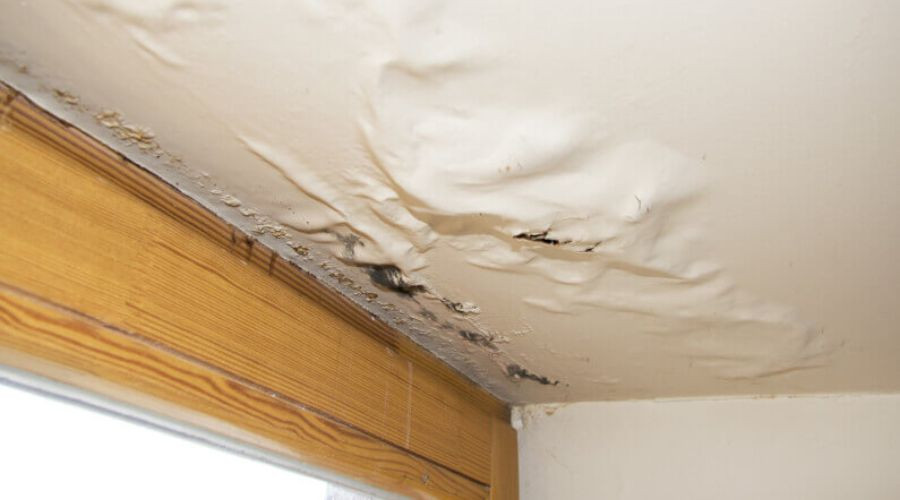
Rusty or Discolored Hot Water: Is Your Water Heater Failing?

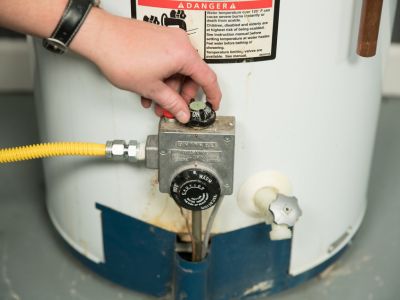
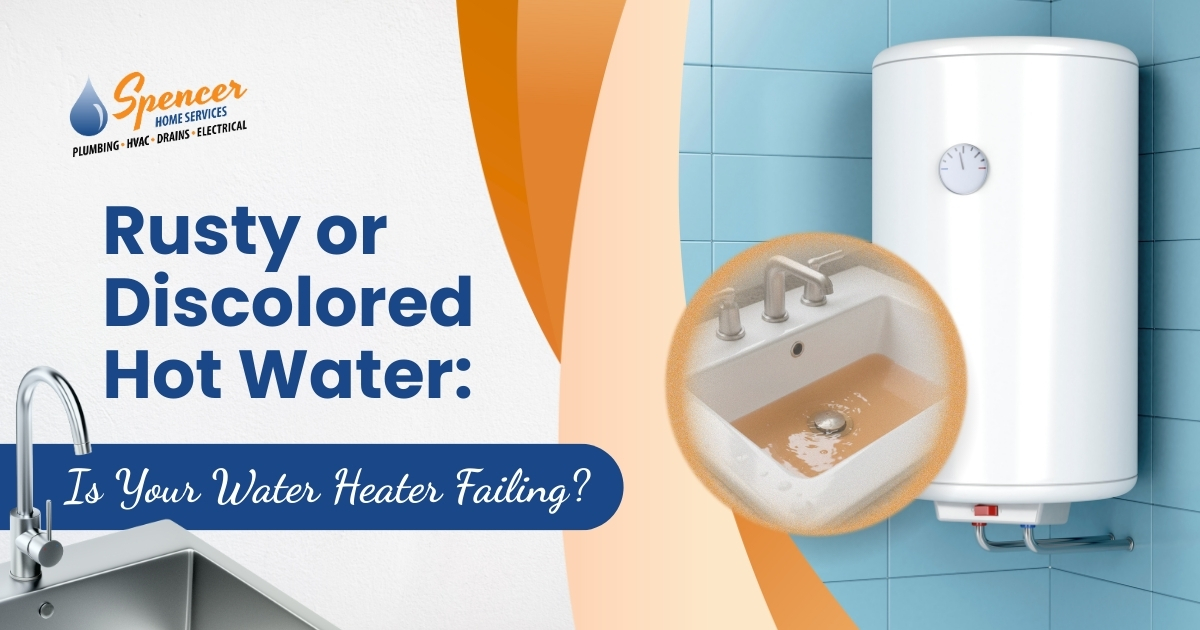
A poster of a water heater, highlighting signs of trouble like discolored hot water—a common indicator your water heater may be failing.

Key Points

  • Rusty hot water with clear cold water usually means water heater problems. 
  • A deteriorating anode rod is the most common cause of rusty hot water in traditional tanked water heaters.
  • Sediment buildup from hard water at the bottom of your water heater tank speeds up corrosion and produces discolored water.
  • Brown or orange water can come from corroded galvanized pipes or municipal water supply issues.
  • Regular water heater maintenance with Spencer Home Services, including heater flush services and anode rod replacement, prevents water discoloring issues.

Turning on your hot water for a shower or your morning coffee and finding rusty or discolored water is an alarming sight. It also signals that something is seriously wrong with your plumbing system or water quality, or both. If you’re experiencing rusty hot water while your cold water runs clear, you’re most likely dealing with a water heater issue that needs attention. Spencer Home Services has been helping Peabody and North Shore, MA, homeowners address water discoloration for over 40 years. 

Why Hot Water Turns Rusty or Discolored

When water appears rusty, you’re seeing rust particles or iron oxide clinging to the water. These particles come from corroding metal somewhere in your plumbing system. 

The discoloration occurs when iron or steel components begin to flake off and mix with your water supply. Occasionally, the water appears cloudy rather than rusty, indicating your water tank is likely filled with sediment. 

Occasional rust in water that clears up after running for a minute or two may indicate disturbances in the municipal water supply, scheduled utility work, pressure changes, or sediment in the water mains. However, if your water is consistently discolored, especially first thing in the morning or after the water heater hasn’t been used for several hours, it indicates an internal issue that requires professional assistance from Spencer Home Services

Spencer Home Services is your trusted local team for plumbing, drain, and sewer services, delivering same-day service and expert repairs. 

Common Water Heater Problems That Cause Rusty Hot Water

There are different parts of a water heater that can begin to corrode and lead to rusty-colored water: 

  • Anode rods: An anode rod is a critical metal rod (typically magnesium, aluminum, or zinc) that sacrificially corrodes to prevent corrosion in the tank. When these deteriorate, the tank corrodes, causing rusty water from the water heater.
  • Tank corrosion: When the anode rod fails and can no longer protect the tank, the interior begins to rust. Tank corrosion is prevalent in water heaters approaching 10–12 years and means they need to be replaced.
  • Sediment buildup: Over time, minerals in the water settle to the bottom of the water heater tank, forming a thick layer. Sediment usually contains rust particles. 
  • Heating elements: In electric water heaters, heating elements do corrode over time, particularly if the anode rod has failed or sediment has built up around them, causing that rusty color in your hot water.

Plumbing Issues Causing Discolored Hot Water

Although water heater problems are typically responsible for hot water discoloration, other plumbing issues in your home can also lead to similar symptoms: 

  • Galvanized pipes: Many older homes in Peabody, Salem, MA, and surrounding North Shore areas were built with iron pipes coated with zinc to protect against corrosion. As the zinc coating wears away, the underlying metal corrodes, producing rust in the water.
  • Municipal water issues: If the utility company performs maintenance on water mains or repairs broken lines, sediment and rust particles from municipal pipes can enter your home’s plumbing. 
  • Pipe connections: Even with new copper pipes, corrosion can occur through a process called “galvanic corrosion.” If you connect the new copper pipe to a different metal, it may corrode more quickly.

How To Troubleshoot Rusty Water at Home

Before calling a plumber, do the following: 

  • Test hot and cold: If you run cold water through multiple taps throughout the house and it’s clear, the problem is most likely with your water heater.
  • Test different fixtures: If rust appears at any hot-water location, the water heater is likely the source. If discoloration occurs at only one fixture, that specific faucet or the supply line may be corroded.
  • Run water and check whether the rusty color runs out: Let the rusty hot water run for several minutes. If the water quickly clears and runs clean, a period of inactivity may have caused sediment buildup.
  • Check your water heater’s age: If it is approaching the 8- to 12-year lifespan, it may be time to replace it. 
  • Listen for popping sounds: Rumbling, popping, or crackling from your water heater indicates sediment buildup at the bottom of the tank. This signals that your tank needs to be flushed by a pro. 

How To Prevent Rusty Hot Water in the Future

Prevention is the easiest way to ensure your hot water runs clear. Follow this list of tips:

  • Replace your anode rod every 3 to 5 years: This will maintain your water heater’s lifespan. If you’re not sure how to replace the anode rod, call a professional plumber. 
  • Flush your tank: Sediment buildup happens, but a regular heater flush service removes minerals before they cause problems. Annual flushing is ideal, though homes with hard water or high mineral content may benefit from semi-annual service.
  • Install a whole-home water filtration system or a water softener: These systems remove minerals that cause sediment buildup and accelerate corrosion.
  • Upgrade to a tankless system: Tankless systems deliver instant hot water, and while they still can accumulate sediment, they are easier to clean and are less prone to corrosion than conventional tanks.

Clear Your Rusty Water With Spencer Home Services

If you’re experiencing consistently rusty water, don’t ignore it. Addressing the issue promptly will prevent it from becoming an expensive headache. Whether it is caused by a deteriorating anode rod, sediment buildup, interior tank corrosion, or aging galvanized pipes, Spencer Home Services can restore it quickly. Call us today to book a consultation and clear your water. For a service that can’t be beat, call Pete!

Frequently Asked Questions

Does brown water mean pipes need replacing?

Not all the time. Brown water from hot taps usually indicates a water heater issue rather than a pipe problem. However, if both hot and cold water are discolored throughout your home, you may have corroded galvanized pipes that need replacement.

Is rusty water dangerous to drink?

Rusty water isn’t typically dangerous to drink in small amounts, but it indicates plumbing issues that require attention. It also stains clothes, dishes, and fixtures. 

Should I drain the tank if the water is rusty?

Draining the tank can help, but it won’t fix the underlying problem. If sediment buildup is causing the rusty water, flushing the tank completely may temporarily improve water quality. Still, if the cause is something else, such as a failing anode rod, the rust will return. 

How much does it cost to replace an anode rod?

Anode rod replacement typically costs $200 to $400 when performed by a licensed plumber. The best thing to do is sign up for routine heater maintenance so a plumber can catch a deteriorating anode rod before it becomes a problem.

Is the water in Essex County, MA, considered hard?

Most of Essex County’s water is soft, but a few areas, such as Lowell, MA, have slightly hard water. Refer to the Massachusetts Water Hardness chart to determine your water hardness level.


Should I Replace the Main Panel or Add a Subpanel?

Two electrical panels mounted on a wall, with the text "Should I Replace the Main Panel or Add a Subpanel?"—exploring main panel replacement and electrical panel upgrade options. Features Spencer Home Services logo.

Key Points

  • A main electrical panel sets the total electrical capacity for your home, while a subpanel adds circuit space without increasing available power.
  • Homes with high electrical demands and outdated panels often require a full electrical panel upgrade rather than a subpanel addition.
  • Subpanels may be a better option when the main panel’s capacity is adequate but has limited circuit space.
  • Local codes, home age, and future plans impact your choice between a subpanel vs. a main panel upgrade.

Whether breakers trip frequently, appliances are underpowered, or there’s no more breaker space for home upgrades, many homeowners eventually max out their existing electrical panel. This is an increasingly common experience as modern homes add electric vehicle chargers, heat pumps, kitchen upgrades, and other devices with high wattage demands. Deciding whether an electrical panel upgrade makes sense for your home depends on current usage, future plans, and local Peabody electrical code requirements.

What Is a Main Electrical Panel?

The main electrical panel, sometimes referred to as the circuit breaker box, is the central hub that receives power from utility lines and distributes it to circuits throughout your home. These circuits supply electricity to lighting, outlets, appliances, HVAC equipment, and other electrical devices or appliances.

Because the main panel determines the total capacity for the entire home, its size and condition directly affect safety, performance, and expansion options. While older homes were built with 60-amp or 100-amp panels, 200-amp panels are now standard for modern homes and higher electrical loads. Many older panels also lack space for modern breakers required by current electrical codes.

What Is a Subpanel?

Main electrical panels are standard in homes, but subpanels are an optional addition. A subpanel is a secondary housing component that receives power from the main panel and distributes it to a specific area of your home. Homeowners often add subpanels to garages, finished basements, workshops, or additions to improve access and organization.

A subpanel increases the number of circuits available, but it doesn’t increase the total electrical capacity of the home since it draws power from the main panel. Proper installation requires correct breaker sizing, grounding separation, and compliance with local electrical codes.

When You Should Choose a Main Electrical Panel Upgrade

A main electrical panel upgrade may be the right choice if your home’s overall electrical demand exceeds what your existing panel can safely handle. Household appliances and devices for electricity for heating, cooling, cooking, and transportation have increasingly higher wattage requirements, and they’ve made 200-amp panels standard for reliable performance. Although upgrading your main panel is an investment, it allows your electric car charging system to operate reliably and safely while accommodating future electrical demand.

Reasons to upgrade include:

  • Increasing electrical capacity: A panel upgrade increases the total amperage available to your home, allowing systems such as EV chargers, heat pumps, high-efficiency HVAC equipment, tankless water heaters, induction ranges, and electric dryers to operate at the same time without exceeding panel limits.
  • Planning for future renovations and load demand: A higher-capacity panel makes it easier to incorporate future additions, remodels, and new electrical equipment as household needs change, reducing the need for repeated electrical modifications.
  • Improve electrical safety: Modern panels allow proper installation of AFCI and GFCI breakers, which interrupt power during arc faults or ground faults that cause electrical fires or shocks.
  • Replacing an outdated electrical panel: Replacing panels that don’t meet modern electrical loads or code requirements lowers the risks associated with outdated equipment, such as surge damage to appliances and devices, frequent breaker trips, overheating and damaged circuits, and electrical fire hazards.

When Adding a Subpanel Makes the Most Sense

As a branch of your main panel, a subpanel can make it more convenient and safe to distribute power throughout your home. Subpanels may cost less than an electrical panel upgrade and may improve electrical layout organization and availability. Homeowners often opt for a subpanel over an upgrade when their existing electrical panel has sufficient capacity but lacks the space for additional circuits and breakers. 

Reasons to add a subpanel include:

  • Manage power safely in specific areas: A subpanel enables dedicated circuits for certain spaces, such as additions, garages, or workshops, reducing the chance of overloading shared circuits on the main panel.
  • Conveniently access breakers: Subpanels can be installed almost anywhere in your home, and a subpanel near garages, workshops, finished basements, or additions allows for more convenient access in those areas.
  • Organization: Grouping related circuits in one subpanel makes it easier to isolate maintenance or repair needs.

Peabody, MA Electrical Codes & Safety Considerations

Local electrical codes influence installation requirements and may impact your choice between a main electrical panel upgrade and a subpanel addition. Many Peabody and North Shore homes, especially in areas near Route 114, West Peabody, and downtown Peabody, still have 60-amp and 100-amp electrical panels and limited breaker space. Older properties across Essex County frequently have limited circuit space, hazardous cloth-insulated wiring, and aluminum branch circuits, which may not safely accommodate subpanel installations. These safety considerations may point toward an electrical panel.

Regardless of your choice, it’s important to refer to a licensed electrician for your upgrades and installations. Without expert knowledge, improper installations create fire hazards, inspection failures, and insurance complications. Licensed electricians evaluate your entire electrical system and plan your installation according to load calculations and code compliance. A comprehensive electrical inspection provides clear guidance and prevents costly corrections later.

Upgrade Your Electrical System With Spencer Home Services

Choosing between a subpanel versus a main panel upgrade depends on your home’s electrical circuit needs. At Spencer Home Services, we help homeowners make informed decisions with comprehensive inspections, clear explanations, and warranty-backed workmanship. Contact us to schedule same-day services and get guidance tailored to your home and local code requirements.

Frequently Asked Questions

How do I know if I need a panel upgrade?

You may need a panel upgrade if breakers trip frequently, the panel lacks space for required new circuits, or you plan to add high-demand equipment like EV chargers or heat pumps. A licensed electrician can complete a load calculation to compare your home’s demand with your panel’s capacity.

Can I install a subpanel myself?

Installing a subpanel requires advanced electrical knowledge, proper grounding, and strict code compliance. Without professional knowledge, DIY installation significantly increases the risk of fire hazards, failed inspections, and insurance issues. In Massachusetts, code compliance generally requires permits and a licensed electrician to complete the installation.

Can I have both a main panel upgrade and a subpanel?

Many homes benefit from both a main panel upgrade and a subpanel addition. A main panel upgrade increases total electrical capacity, while a subpanel improves circuit organization and access in specific areas. This combination works well for larger homes, renovations, garages, or workshops that need dedicated circuits alongside higher overall power availability.

Is It Time to Go from 100 Amp to 200-Amp Service?

A man in safety gear stands by electrical panels with a sign reading, "Is it time for an electrical upgrade from 100 amp service to 200 amp service?" and a Spencer Home Services logo.

Key Points

  • A 100-amp service handles smaller loads, while a 200-amp service handles much higher loads required for today’s modern appliances and devices.
  • Homeowners should be aware of the signs they need to upgrade to a 200-amp service, including frequent breaker trips and flickering lights.
  • Spencer Home Services Plumbing, HVAC, Drains, and Electrical provides professional, reliable electrical panel upgrades in Peabody, MA.

Settled in the 1600s, the city of Peabody, MA, is just a 25-minute drive from Boston and has many historic homes, some of which have 100-amp service. If you live in the area, it’s important to consider whether upgrading from 100- to 200-amp service is the right choice for your electrical system. 

What’s the Difference Between 100-Amp and 200-Amp Service?

A 100-amp service is typically used for smaller homes and lighter electrical loads, while a 200-amp service has twice the capacity and is ideal for today’s households. Electrical panels with 100-amp service can handle basic needs, but those with 200-amp service provide double the capacity. The experienced team at Spencer Home Services Plumbing, HVAC, Drains, and Electrical offers a range of reliable services, including professional panel upgrades to enhance your home’s safety and functionality. 

Signs Your Peabody, MA, Home Needs a 200-Amp Panel Upgrade

It’s important to recognize the signs that your Peabody home may require a 200-amp service upgrade. You might need an electrical panel upgrade if you’ve experienced the following:

  • Your circuit breakers keep tripping: If they keep tripping, they’re drawing too much power and placing excess strain on your panel.
  • Dimming or flickering lights: Lights that dim or flicker frequently are a common sign that you may need a 200-amp panel upgrade.
  • Strange odors or noises: Unusual buzzing, crackling, or humming, or a strong smell of burning plastic, are serious signs of overheating or loose connections in your panel.
  • Hot panels or outlets: If your panel or electrical outlets feel hot to the touch, it’s a serious sign that you need 200-amp service as soon as possible to prevent fire or electrical shock.
  • You’re using extension cords: The constant need for power strips and extension cords indicates you don’t have enough outlets to meet your needs. 
  • Old panels: Electrical panels that are 25 years old or older, or panels that use fuses, should be upgraded as soon as possible for higher electrical service capacity. 

When Should You Upgrade to a 200-Amp Electrical Panel?

If you’re wondering, do I need 200-amp service? Several scenarios require this important home electrical system upgrade:

Adding new appliances or remodeling

If you need to add new major appliances or install an EV charger, you should upgrade to a 200-amp service panel. When installing a new heat pump or a large electric furnace, you should also upgrade to 200-amp service. Homeowners who are adding a new room or preparing for a major home remodel should also consider scheduling an upgrade. 

You need localized power

If you’re wondering whether to replace the main panel or add a subpanel, installing one is helpful for sheds or garages. A subpanel provides localized power to specific areas of your home. If you’re upgrading your electrical panel, adding a subpanel offers additional capacity for optimal performance.

Old panels or low-capacity panels

Electrical panels older than 1980 and panels with fuses or aluminum wiring require a panel and wiring upgrade. When your panel is old and uses outdated materials, it presents a serious safety hazard. It’s also a good time to upgrade if you’re out of available circuits to run more devices. 

You’re planning for the future

Even if you don’t need to install a 200-amp panel right now, doing so helps you prepare for the future. An upgraded electrical panel replacement provides you with more load capacity to meet the needs of your modern household. If you’re planning to sell your home, it’s also a smart way to boost your property value by making sure that your circuit breaker panel meets NEC (National Electrical Code) standards.

Benefits of Upgrading to 200-Amp Service

Comparing a 100-amp panel vs. a 200-amp panel makes it easy to see why upgrading is so beneficial. Here are the perks of choosing a 200-amp service for your Peabody area home:

  • More capacity: A 200-amp panel handles several high-draw appliances and devices all at the same time without posing a safety risk.
  • Future-proofs your home: Upgrading to a 200-amp service prepares your home for any future tech and electrical needs.
  • Safer: Replacing a 100-amp panel with a 200-amp panel reduces the risk of shorts, overheating, sparking, overloads, shock, and electrical fires. 
  • Boosts home value: When you upgrade to 200-amp service, you make your home more attractive to potential buyers who want a home that can handle modern electrical demands. 

What Happens During a 200-Amp Service Upgrade?

Once you schedule a 200-amp service upgrade with a licensed electrician from Spencer Home Services, here’s what happens during the process.

  • Step one: A residential electrician performs an electrical load calculation, coordinates permits and schedules a temporary power shutdown that typically lasts between four and eight hours for the final connection.
  • Step two: The power to your home is shut off at the street, and the existing meter base is replaced with a 200-amp meter socket.
  • Step three: New conduit, service entrance cable, and a thicker electrical wiring installation may be required.
  • Step four: Your old breaker panel is removed, and the new 200-amp breaker panel is mounted.
  • Step five: Existing branch-circuit wires are disconnected from the old panel and reconnected to the new panel. The grounding system may be updated or expanded.
  • Step six: Once the service upgrade technician completes the work, they perform a thorough electrical inspection, and the utility company reconnects power to your new meter. 

Cost Factors To Consider for a 200-Amp Panel Upgrade

The cost of a 200-amp panel upgrade averages $1,500 to $6,500 or more. Cost factors to consider include ease of access, permit costs, current labor and material costs, and whether you’re installing other items, such as AFCI and GFCI breakers. Home rewiring, EV charger installation, and generator hookups may also increase the upgrade cost. 

Contact Spencer Home Services Today!

Spencer Home Services Plumbing, HVAC, Drains, and Electrical doesn’t aim to be the cheapest. We aim to be the best. Backed by decades of experience, expert technicians, and industry-leading warranties, we deliver high-quality, lasting solutions done right the first time. From Peabody and Salem to Beverly, Danvers, and Lynn, contact us today to schedule your 200-amp electrical panel upgrade. 

Frequently Asked Questions

How long does it take to upgrade to 200-amp service?

While the time required to upgrade to 200-amp service varies, most jobs take 1–2 days to complete. Remember that your upgrade will also include a four- to eight-hour window of temporary power outage while the electrician makes the final connection.

Can I run central AC or heat pumps on a 100-amp panel?

In some cases, you can run central AC or heat pumps on a 100-amp panel, especially for smaller homes. However, we recommend scheduling a professional load calculation to confirm that the panel can accommodate additional major appliances simultaneously.

Does upgrading increase home value?

Yes, upgrading your electrical panel may increase your home’s value. Many home buyers are seeking properties with safe, code-compliant electrical systems capable of handling heavy electrical loads.

Kitchen Drain Smells Bad? Plumbing Issues Causing the Issue

A plumber stands with folded arms next to text that reads, "Kitchen Drain Smells Bad? Drain Odor or Plumbing Issues Could Be the Cause." Spencer Plumbing logo appears in the corner.

Key Points

  • Bad odors coming from a sink typically come from organic debris, grease buildup, bacterial buildup, or a dry P-trap.
  • The odors are stronger when there is a vent blockage or problems with your plumbing vent system.
  • North Shore humidity and Peabody’s older housing create unique challenges for kitchen plumbing.
  • Simple DIY fixes include flushing drains with hot water, baking soda, and vinegar, cleaning garbage disposals, and checking P-traps.
  • A persistent sulfur aroma, rotten eggs, or sewage smells require professional drain cleaning services.
  • Licensed Peabody plumbers will perform camera inspection and hydro jetting for stubborn clogs and odors.

There is nothing worse than walking into your kitchen and being hit with a foul and pungent odor wafting up from your sink drain. Whether it smells like rotten eggs, sewage, or something musty and unpleasant, a kitchen drain that stinks is often a sign of underlying plumbing issues that need attention. 

At Spencer Home Services, we’ve helped countless Peabody homes tackle stubborn drain odors. In this comprehensive guide, we’ll walk you through the common causes of kitchen drain odors, some DIY solutions you can try, and when it’s time to call a licensed plumber from Spencer. 

Common Causes Why Your Kitchen Drain Stinks

Understanding why your kitchen sink drain smells bad starts with identifying the source. In Essex County, MA homes, particularly in Peabody, Danvers, and Salem, several factors contribute to drain odors, whether it’s a kitchen drain that smells like mildew or sewer smell from the sink: 

  • Grease
  • Organic biofilm debris
  • Mold growth
  • Dry P-traps
  • Garbage disposal issues

Why Does Your Sink Drain Smell Like Sewer?

Sewer odors always indicate the smell is coming from your piping vents or sewer line. These are usually problems that require a professional plumber’s touch.

  • Blocked venting: In older Peabody homes built before the 1980s, vent blockage is a common problem. Things like leaves, ice, and even a bird’s nests restrict airflow in the pipe. When the vents are blocked or broken, negative pressure develops in your drain lines and pulls water out of the P-trap, bringing a sink drain that smells like sewer.
  • Sewer line issues: Cracks, clogs, or a sewer backup can cause gases to travel back through your drain pipes. Any large damage is usually a call for an emergency repair. 
  • Pressure and temperature changes: North Shore humidity during summer months and cold winters in Essex County MA, creates unique challenges. Temperature fluctuations affect air pressure in your plumbing vent system, sometimes forcing sewer gas into your home through weak points in the system. 
  • Outdated S-Traps: Some older homes in Danvers, MA and Salem, MA were built with S-traps instead of P-traps. These are now prohibited in modern codes because they are known to cause the water seal to get sucked out, leaving your kitchen exposed to sewer odor. 

DIY Fixes for a Kitchen Drain That Smells Bad

There are a few DIY fixes for that bad and lingering kitchen drain smell that Peabody homeowners can take before calling Spencer Home Services:

  • Hot water flushing: Boil a kettle of water and carefully pour it down the drain in stages, allowing it to work for a few seconds between pours. This can clear grease and food debris clogging pipes and help keep away those pesky drain flies.
  • Baking soda and vinegar: Pour half a cup of baking soda down the drain, followed by a cup of white vinegar. Cover the drain and let the mixture fizz for 15-30 minutes, then flush with hot, not boiling, water.
  • Clean the garbage disposal: You can use things like ice, rock salt, and cold water to freshen the garbage disposal. 
  • Fill the P-Trap: In rarely used sinks, run some water down the sink for a minute to fill the trap. There are also plumbing devices called trap primers that automatically supply water to a P-Trap.

When to Call a Licensed Peabody Plumber

While some of the above DIY fixes will work for minor problems, there are instances when it makes more sense to call a professional Peabody plumber: 

  • Lingering odor after DIY attempts: If you’ve tried multiple DIY methods and the smell comes back quickly, there’s likely a deeper issue within your drain pipe system. Plumbers will feed a camera down your pipes to find the cause and choose the best course of action, like hydro jetting.
  • Multiple drains smell bad: This means you’re dealing with a sewer line issue, which needs plumbing repairs. 
  • Slow drainage or standing water: This usually means a clog, and if DIY plumbing doesn’t remove it, call Spencer Home Services. 
  • Gurgling: Strange gurgling noises when water drains, or water that backs up in other fixtures when you run your kitchen sink, often indicate problems with your drain vent or sewer line.
  • Garbage disposal issues: If you can’t get rid of that smell from the garbage disposal, it could point to a larger problem that needs repairs.
  • Water damage or visible leaks: Turn off the water and have a plumber look at the extent of the damage. Ignoring this issue will cause expensive structural damage. 

Get Rid Of Kitchen Drain Smells With Spencer Home Services

If the DIY methods for those terrible kitchen drain smells aren’t cutting it, or you’re worried about a clog or pipe damage, let a professional and licensed plumber handle it. Whether you need emergency plumbing or routine drain maintenance, our Spencer Home Services team is ready to help. Call us today to restore your drains and leave them smelling fresh. 

Frequently Asked Questions

What can a plumber do about a smelly kitchen drain?

We will check the cause of the smell with a camera and decide if it’s better to snake the drain or hydro jet it. Hydro jetting blasts high-pressure water down the pipe and cleans its walls. 

How often should I clean my kitchen drain to prevent odors?

Flush your drain bi-weekly or monthly with hot water. The baking soda and vinegar method is a great preventive measure to do so monthly. We also recommend our professional drain cleaning services annually. 

Can hard water contribute to kitchen drain smells?

Yes. Hard water is common throughout the North Shore, MA region and contributes to drain odors. Mineral deposits from hard water combine with soap scum, grease buildup, and organic debris to create a thick coating, usually biofilm, inside drain pipes. 

Should I use chemical drain cleaners for smelly drains?

We don’t recommend it! These store-bought drain cleaners have harsh chemicals that eat away at your pipes’ lining and only temporarily resolve the issue.

Is it normal for my kitchen drain to smell after it rains?

No, and if this is the case, you probably have a problem in your sewer line. In Essex County, MA, heavy storms are common, which often indicates a vent blockage, a cracked sewer pipe, or improper venting.

How to Tell If Your Sewer Line Is Broken [7 Red Flags]

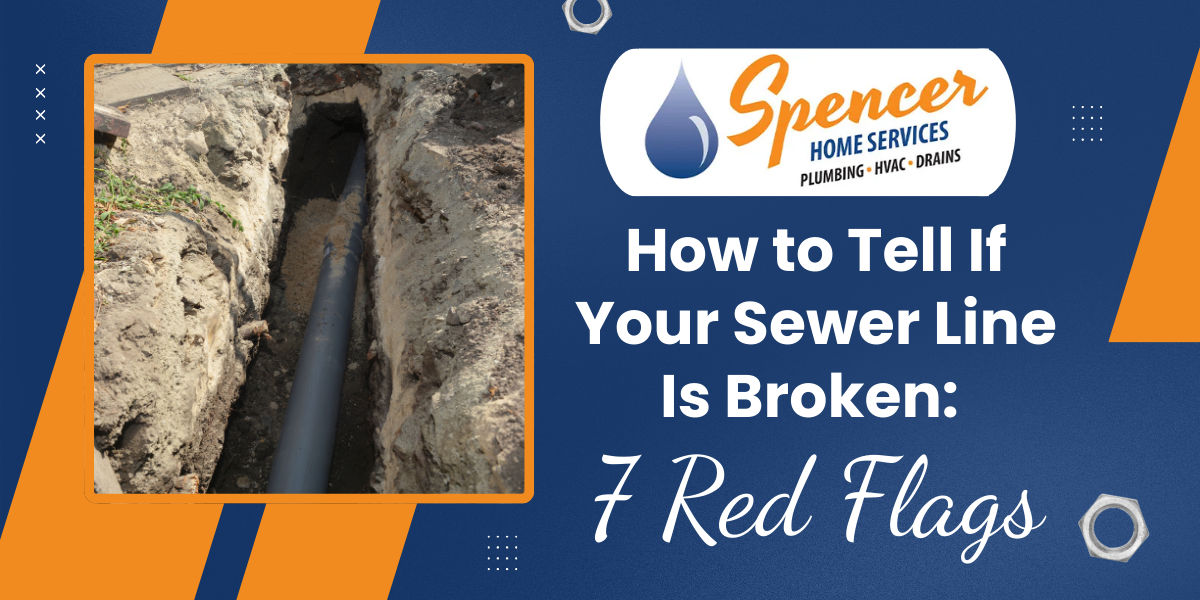
A pipe in a hole could indicate sewer line issues; watch for common sewer line signs to avoid a broken sewer line.

Key Points

  • Common signs of sewer line damage include slow drains, sewage backups, pest activity, and foul odors.
  • Some reasons sewer lines break include shifting soil, high pressure from major clogs, age, improper installation, and tree root intrusion. 
  • Spencer Home Services provides quick, effective plumbing solutions for Massachusetts residents, including traditional and trenchless sewer repair services. 

Spencer Home Services offers a diverse range of services, including comprehensive traditional and trenchless sewer line repair, throughout the Greater Boston area, including Danvers, Lynn, and other nearby communities. 

Warning Signs Your Sewer Line Is Broken

Wondering how to tell if your sewer line is broken and when to call Spencer for sewer line repair? The following are the most common signs of a burst sewer pipe or clogged sewer line

1. Sewage backups in multiple drains

If wastewater backs up into your showers, sinks, tubs, or other drains in your home, or if multiple toilets are backing up, it could indicate a broken sewer line. Sewage backups not only smell bad, but they’re also a health hazard, because raw sewage contains bacteria and viruses you shouldn’t come in contact with. Avoid using water if possible, and call a professional plumber for immediate assistance.

2. Slow drains throughout the entire home

Hard-water mineral deposits, more common in rural Massachusetts, can cause slow drainage. Multiple slow drains occurring throughout your home are a major sign of sewer line damage. A burst, collapsed, or otherwise damaged sewer line will affect your entire home’s wastewater drainage. Even a partial collapse can cause serious drain and toilet issues. 

3. Strong sewer odors inside or outside the house

Sewer gas has a distinctive, foul odor. If you smell a rotten-egg-like odor coming from your sinks, bathtub, and other drains, especially in the bathrooms and kitchen drains, it could be due to sewer line issues. This foul smell will escape your drains and waft into your home because the waste is trapped in your pipes, with nowhere else to go. 

Never ignore a strong sewage smell in your house, as it’s an indicator of a serious underlying plumbing problem. Sewer gases are also hazardous to breathe at high concentrations.

4. Gurgling toilets and bubbling drains

When your sewer line is compromised, air can get trapped inside the plumbing. When water flows through the pipes, trapped air can cause your toilet and drains to gurgle and bubble. 

5. Wet spots, sinkholes, or extra-green grass in the yard

A cracked sewer line will leak out nutrient-rich wastewater that, over time, may accumulate to form wet spots in your yard. It could also wash away soil beneath the surface, creating unstable ground and sinkholes, while delivering natural fertilizer to the grass, causing bright green patches and a spongy feel. 

6. Rodents or insects near sewer areas

Leaking sewage attracts pests, as it provides them with food and shelter. If you notice an increase in insects, rodents, or other pests around your home, it could indicate a sewage line issue. 

7. Foundation cracks or soil shifting

Over time, underground soil erosion from leaking sewage can change the ground, causing further damage to the plumbing and creating problems with your home’s foundation as the ground settles unevenly. 

What Causes Sewer Lines to Break?

Some of the leading causes of broken sewer lines in our area include: 

  • Major clogs: Foreign objects or large accumulations of grease and debris can form in the sewer line, putting excess pressure on the plumbing and leading to cracks and leaks. 
  • Improper installation: If the line was put in at the wrong slope or without proper support, it could crack or shift over time. 
  • Tree root intrusions: Tree roots will always seek sources of water and nutrients, both of which are plentiful inside your sewer line. Over time, roots can invade the pipe, causing serious damage and clogs.
  • Cracked or corroded pipes: Aging pipes are prone to failure due to material degradation and corrosion. 
  • Ground shifting: Pipe damage, such as cracks or bellied sewer lines, often occurs when the ground shifts, and soil settlement adds pressure to the underground plumbing. 

Repair Options for a Broken or Cracked Sewer Line

Your sewer line is an underground pipe that runs from your home to the municipal sewer system or to your septic tank. The following are the two main options we have for sewer line repair:

Traditional sewer line repairs

Traditional sewer line repairs involve digging a trench to access the damaged pipe. We will remove any crushed, cracked, or failing sections and replace them with new pipes. This method is more invasive than the trenchless option, but it is often required when damage is severe. 

Trenchless repairs

As the name suggests, trenchless repairs are done without digging a trench. Instead, we insert a bursting head that breaks the old pipe and simultaneously installs a new one, or we insert new liners into existing plumbing without major excavation. 

When you choose Spencer Home Services, we’ll review the cost of your sewer line repair or replacement, the expected repair timeline, and what to expect. From Salem to Beverly, we work with our community members to provide the best solution, without cutting corners. 

Contact Spencer Home Services for Sewer Line Repair

Spencer Home Services is a family-owned and operated business committed to providing excellent service to homes and businesses across Essex County and the North Shore, including Danvers, Lynn, and other nearby communities. 

Do not hesitate to contact us if you notice any warning signs of a broken sewer line. We’re available now to provide sewer camera inspections, sewer line repairs, and emergency plumbing services, or to answer questions about sewer line permits. You can trust our reliable plumbing crew to do what’s right. We never take shortcuts and often offer same-day service, backed by an industry-leading 30-year parts-and-labor warranty for your peace of mind. 

Call us at 978-293-5770 or contact us using our online form to schedule service. We work Monday through Saturday, and our answering service is available 24 hours a day. 

Frequently Asked Questions

How do I confirm a broken sewer line?

While some signs, such as slow drains and sewage backups, can indicate sewer line issues, the best way to confirm a broken sewer line is by scheduling a camera inspection. We’ll run a flexible, waterproof camera down the drain to find out exactly what’s happening in your sewer line.

Can a sewer line be partially broken?

Yes, partial breaks in sewer lines are more common than complete collapses. A partial break will slow water flow and impair functionality, but it may remain functional for months or even years before entirely collapsing.

How long does trenchless sewer repair last?

Trenchless repairs are long-lasting solutions. They’re designed to withstand regular plumbing wear and tear for decades, making them comparable to, or even better than, other repair methods. 

Why Is My Furnace Blowing Cold Air?

Whole home air purifier and cleaner system installed by Spencer Home Services

If your furnace is blowing cold air as the temperatures dip across Peabody and the North Shore, several problems may be responsible for your chilly indoor spaces. Understanding what causes furnaces to blow cold air and when to call an HVAC technician helps you keep your home comfortable and safe throughout the winter.

Key Points

  • Older ductwork, large home layouts, and coastal weather patterns make cold air issues more noticeable in Peabody and Essex County.
  • Gas and electric furnaces have different components and potential problems that cause them to blow cold air.
  • Basic troubleshooting can help you resolve simple fixes or know when to call Spencer Home Services.

Is It Normal for a Furnace to Start by Blowing Cold Air?

During a typical heating cycle, the burners ignite first and begin warming the heat exchanger. Once the exchanger reaches the appropriate temperature, the control board sends power to the blower fan to begin circulating warm air. At the beginning of this process, the furnace may briefly blow cold air and then turn warm.

If cool air persists throughout a heating cycle, it indicates an underlying problem affecting furnace operations.

Common Reasons Your Furnace Is Blowing Cold Air

Several system-wide issues can cause a furnace to run without producing heat. These problems affect gas and electric systems alike and often stem from controls, airflow restrictions, or safety responses.

Faulty thermostat

Thermostat settings and signals allow your furnace’s control board to precisely manage outputs and inputs, and even a minor thermostat problem can present like a major furnace failure. If the fan is set to on instead of auto, the blower runs continuously and circulates unheated air between cycles. A thermostat that is uncalibrated, faulty, or running on weak batteries may send incorrect signals to the furnace, creating a pattern where the system runs, stops, and runs again without consistent heating.

Control board malfunction

The control board acts like the system’s traffic coordinator, sending power and timing signals to ignition, gas valves, heating elements, and blower controls. In furnaces with aging electronic components, a faulty board may deliver inconsistent voltage to the heating components while still powering the blower.

Clogged air filters

Air filters regulate airflow through the furnace and duct system. When a filter becomes clogged, it restricts airflow and reduces heating output. The furnace may heat up internally faster than it can shed heat, potentially prompting safety controls to shut down the burners and keep the fan running.

Blower fan problems

The blower’s timing needs to match the heating sequence so the furnace moves warm air at the right moment. If a relay sticks or a fan timer fails, the blower may operate out of sequence and push cold air into your indoor spaces.

High-limit safety shutdown

Furnaces include high-limit switches that monitor system temperatures. When internal temperatures exceed safe thresholds or falsely detect unsafe temperatures, the switch shuts off heating to protect the system and often keeps the blower running. In North Shore climates, cold coastal temperatures often strain furnaces, increasing the likelihood of overheating shutdowns.

Ductwork design and airflow imbalance

Many homes in West Peabody and Brooksby Village rely on undersized or aging duct systems that struggle to distribute air evenly. Poor return air placement in large Colonials and Cape-style homes limits circulation, while long duct runs allow cold air to pool before warmed air arrives, making vents feel cold even when the furnace is running.

Problems With Gas Furnaces That Cause Cold Air

Gas furnaces include specific components that can interrupt heating and cause cold air to blow from vents. Gas heaters may blow cold air due to these problems:

  • Ignition or pilot light problems: Older furnaces use standing pilot lights that can go out due to worn or faulty components, while newer systems rely on electronic igniters that wear or crack with repeated heating cycles. When ignition fails and the burners don’t light, the blower circulates unheated air.
  • Flame sensor failure: When the flame sensor becomes coated with residue or otherwise faulty, it can’t confirm burner ignition and will shut off gas flow.
  • Gas valve and fuel delivery issues: Valves that are partially closed or worn limit gas availability, so the burners fail to stay lit and halt heating.
  • Venting and condensate problems: High-efficiency gas furnaces produce condensate that drains through dedicated lines. North Shore humidity contributes to clogs that trigger pressure switch or moisture sensor lockouts, stopping heating output.

Issues With Electric Furnaces Blowing Cold Air

Electric furnaces use electrical resistance to generate heat. These issues may cause electric furnaces to blow cold air:

  • Heating element failure: Electric heating elements in older or strained furnaces may wear out and fail, preventing the system from producing heat while the blower continues operating.
  • Faulty sequencers: Sequencers control the order and timing of heating element activation. When they stick or fail, the blower may run without the elements warming the air properly.
  • Electrical supply issues: Tripped breakers, deteriorated wiring, or overloaded panels interrupt power to heating components. This problem is common in older Peabody homes with outdated panels and limited electrical capacity.

How to Troubleshoot a Furnace Blowing Cold Air

Try these strategies to troubleshoot your furnace if it’s blowing cold air:

  • Verify thermostat settings: Confirm the thermostat is set to heat and the fan setting is auto, and replace batteries if needed. If the thermostat appears faulty or unresponsive, it may need to be replaced.
  • Inspect pilot light: If you have an older gas furnace with a standing pilot, verify the pilot is lit according to your owner’s manual. If it flickers, turns yellow, or won’t stay lit, stop and schedule service.
  • Check for error codes: Many modern furnaces provide error codes in case of faulty operation.
  • Inspect gas supply: Check gas shutoff valves near the furnace and along the supply line to confirm they are fully open and undamaged.
  • Replace air filter: If your filter appears dirty, replace it with the correct model.
  • Check vents and registers: Confirm that supply and return vents are open and unobstructed.
  • Inspect ductwork: Visually inspect ductwork for gaps, sagging, or other damage.
  • Reset breakers if necessary: If the furnace has no power, inspect the breaker panel for a tripped breaker and reset it. If it trips again, leave it off and schedule furnace repair.

Repeated resets, breaker cycling, or attempts to repair gas or electrical components are hazardous without professional knowledge. If cold air persists, contact Spencer Home Services for safe and accurate repairs.

When to Consider Replacing Your Furnace

The performance, reliability, and efficiency of your furnace depend on its age and overall condition. Furnaces that are 15 to 20 years old are more likely to experience breakdowns and require costly repairs, and worn-out components often result in less efficient operation and higher heating bills.

Many aging furnaces are also unable to match the heating needs of large Colonial and Cape-style homes, but upgrading to a modern system can provide benefits like even temperatures, reduced heating costs, and improved reliability. At Spencer Home Services, our HVAC technicians can inspect your furnace and provide expert insight to help inform your decisions.

Schedule Furnace Repair With Spencer Home Services

When your furnace is blowing cold air and leaving your home chilly during winter, Spencer Home Services is your trusted local team for HVAC repair, in addition to plumbing, drains, and electrical. Contact us to book same-day service or a replacement estimate, with free second opinions and warranty-backed workmanship.

Why Does My Boiler Keep Turning On and Off?

A gray boiler heater stands upright next to text asking, "Why does my boiler keep turning on and off?"—highlighting common boiler troubleshooting concerns—with Spencer Home Services branding in the corner.

Key Points

  • Boiler short cycling occurs when a boiler repeatedly cycles on and off for brief intervals, which can lead to premature wear and reduced efficiency.
  • Some common causes of boiler short cycling include dirty components, low water pressure, and thermostat issues.
  • Cold temperatures can cause boiler short-cycling if the boiler is oversized, the home has uneven heating, or too much fuel is used too quickly.
  • The skilled HVAC technicians at Spencer Home Services Plumbing, HVAC, Drains, and Electrical provide reliable boiler services, including expert repairs, replacements, and maintenance. 

What Is Boiler Short Cycling?

Many homes in the cities of Peabody, Salem, and Danvers still rely on older gas or oil boilers and baseboard radiators, which are prone to short-cycling due to age and corrosion. Boiler short cycling occurs when your boiler turns on and off repeatedly in short bursts of between 10 and 20 minutes. When this happens to your boiler, it leads to inefficient operation and excessive wear and tear on major components. Fortunately, the experienced team at Spencer Home Services Plumbing, HVAC, Drains, and Electrical provides professional heating services, including boiler repair, replacement, and maintenance, to keep your home comfortable and safe all winter.  

Most Common Causes of Boiler Short Cycling

A boiler that’s turning on and off constantly might be experiencing one of many issues. Regardless of the reason, a boiler that short-cycles can lead to higher energy bills, a costly breakdown, uneven heating, and excessive wear and tear that can cause sudden failure. If you’re dealing with boiler issues, contact Spencer Home Services to schedule residential boiler service.

Here are some of the most common causes of boiler short cycling: 

  • Improperly sized: If your gas or electric boiler is oversized, it may produce heat faster than it can be used, causing the thermostat to turn off and then back on repeatedly.
  • Thermostat issues: A thermostat placed near a heat source, a drafty area, or a malfunctioning thermostat can easily lead to boiler short cycling by sending inaccurate temperature signals to the unit.
  • Low water pressure: If you have low water pressure in your home, it can impede proper water circulation, which may trigger safety shutdowns.
  • Air pockets: Trapped air in a radiator or pipes blocks water flow, resulting in inaccurate temperature readings and localized heating.
  • Dirty components: A clogged filter, blocked vents, a dirty or blocked heat exchanger, or sludge in the pigtail pipe can restrict airflow and impede proper heat transfer.
  • Malfunctioning circulation pump: If the circulation pump is broken or weak, it may cause short cycling and sensor errors since it can’t move hot water effectively. 
  • Incorrect settings: An incorrect setpoint or control issues may result in short cycling.
  • Pressure sensor issues: When the boiler’s pressure sensor is dirty or defective, it can cause the boiler to operate erratically and short-cycle.

Why Is Your Boiler Short-Cycling When It’s Cold?

A boiler that starts short cycling when it’s cold may not always be due to issues with specific components. Here’s why your boiler might start to short-cycle when the frigid Massachusetts winter temperatures arrive:

  • The boiler is oversized: an oversized boiler produces heat faster than your home can use it, which causes it to shut off prematurely.
  • Airflow issues: If your vents are blocked or your filter is dirty, airflow is restricted, which can cause the boiler to overheat and shut down as a safety precaution.
  • Water flow issues: As temperatures drop, your pipes may contract, causing a frozen condensate line or a leak that reduces water pressure and triggers short-cycling.
  • Poor system design: An insufficiently sized boiler pump or piping can’t move hot water away from the boiler fast enough, resulting in rapid temperature spikes. 
  • Uneven temperatures: If you live in an older or drafty home, the boiler may struggle to meet demand in some areas, resulting in uneven heat distribution and short cycling.
  • Excess fuel use: When a boiler starts short-cycling as it gets cold, it uses gas or oil much faster than usual, which can cause your system to stop working until an experienced heating company addresses the issue.

Why Peabody, MA, Homes Are More Prone to Short Cycling

If you live in Peabody, MA, or the surrounding areas, your home may be at higher risk of short-cycling.

  • Older boilers may experience short-cycling due to age and corrosion.
  • The North Shore winters bring extended periods of freezing temperatures that increase the odds of thermostat misreadings, low system pressure, or frozen condensate lines.
  • Many older colonial and Cape-style homes in Peabody have outdated piping layouts that lead to poor circulation and short-cycling boilers.
  • Hard water in this area can contribute to excessive scale buildup, reducing boiler efficiency and increasing pressure, a common cause of short cycling.

How To Troubleshoot a Boiler That Keeps Turning On and Off

It’s best to contact a licensed plumber or heating contractor if your boiler keeps turning on and off. However, there are some troubleshooting steps to take before you call for emergency heating repair:

  • Step one: Check the boiler’s pressure gauge to confirm it’s at 1-1.5 bar. If it’s low, there may be a leak.
  • Step two: Press your boiler’s reset button to clear any temporary faults, per the manufacturer’s instructions, and see if this resolves the problem.
  • Step three: Check your thermostat batteries to ensure the thermostat is on and working, and verify the settings are correct.
  • Step four: Confirm that the gas supply is on and power is connected to the boiler.
  • Step five: Inspect all vents and flues for obstructions and ensure the condensate pipe is not frozen. 
  • Step six: If you have a modern boiler, check the display for error codes, record them, and refer to your owner’s manual for troubleshooting guidance.

Call Spencer Home Services Today!

Spencer Home Services Plumbing, HVAC, Drains, and Electrical doesn’t aim to be the cheapest. We aim to be the best. Backed by decades of experience, expert technicians, and industry-leading warranties, we deliver high-quality, lasting solutions done right the first time. 

If you’re facing issues with your boiler in Peabody, North Shore, Salem, Danvers, Beverly, Lynnfield, Middleton, or Essex County, MA, we’re here to help. For service that can’t be beat, call Pete today!

Frequently Asked Questions

Is boiler short cycling dangerous?

Yes, boiler short cycling is a serious issue that wastes fuel and energy, reduces the boiler’s lifespan, stresses components, and can indicate a cracked heat exchanger in gas boilers, which could lead to a dangerous carbon monoxide leak.

Can an oversized boiler cause short cycling?

Yes, an oversized boiler is one of the most common causes of short cycling. When a boiler is oversized, it heats your home too quickly, reaches its setpoint, then shuts off and quickly turns on again because it can’t remove heat efficiently.

How do I know if I need boiler repair or replacement?

If your boiler is 15 years old or older, you experience recurring breakdowns, or the repair cost is 50% or more of a new boiler’s cost, a replacement is recommended over repair.

Drain Cleaning: What Homeowners Need to Know

Drain Cleaning Explained

Clogged drains and sewer lines are a common household nuisance that can quickly escalate into a plumbing emergency. Sewer line clogs can cause major inconveniences and lead to more severe and messy problems when not addressed.

Homeowners can prevent them from escalating by understanding the signs of a clogged sewer line that indicate drain cleaning is needed. This post will share some common signs of a sewer line clog so homeowners know when to call a plumber for drain cleaning and common drain cleaning methods professionals use to clear clogs.

When Do Homeowners Need Drain Cleaning Services?

drain clog To prevent plumbing issues that can occur when a sewer line clog is neglected, homeowners must schedule drain cleaning services at the first signs of an issue. Several indicators can signal a clogged drain, including:
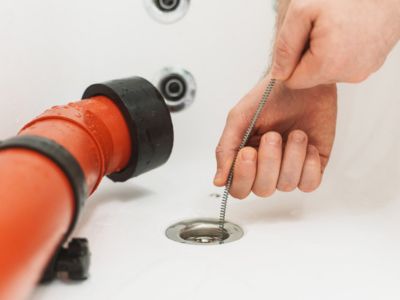
  • Slow drains: When water takes longer than usual to drain.
  • Gurgling noises: Unusual sounds like gurgling coming from the drains.
  • Foul odors: Unpleasant smells coming from drains.
  • Sewer backups: Sewage or wastewater backing up from drains and toilets.

What Is Drain Snaking?

drain snakingWhen plumbers are called to unclog pipes and remove blockages, one method they can use is drain snaking. Drain snakes, also known as a plumber’s snake or drain auger, are a common method for clearing clogs. It involves using a long, flexible cable with a corkscrew-shaped tip to dislodge the clog.
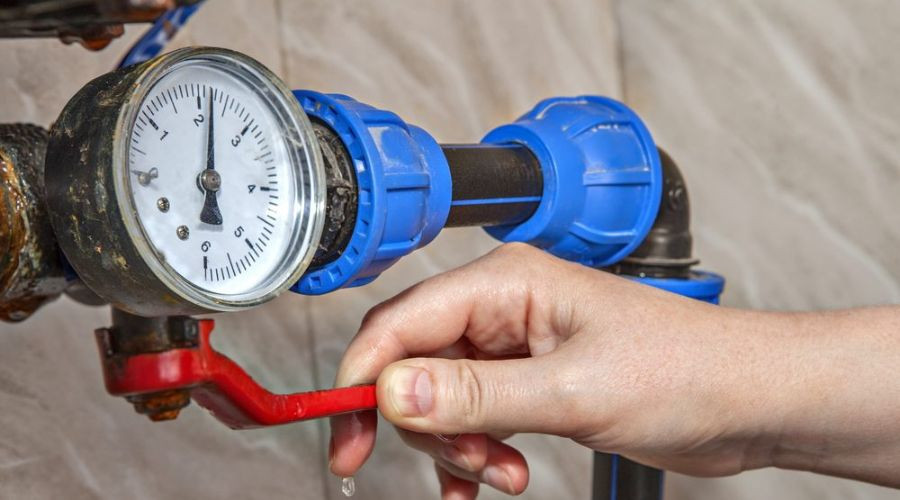
They can effectively remove or break up clogs to enable proper flow. A plumber’s snake can be used for clogs made up of many materials, such as hair, food, tree roots, and other common debris and materials that are the cause of a clogged sewer line.

What Is Hydro Jetting?

If a large, stubborn clog occurs or the line clogs frequently, another drain cleaning technique called hydro jetting may be the preferred method to remove the blockage. Hydro jetting involves using high-pressure water to unclog the line. It is especially effective because it eliminates the clog and cleans the line to eliminate any additional debris or buildup that could lead to future clogs.

So, unlike drain snaking, hydro jetting also helps reduce the risk of future clogs forming. Hydro jetting can also be used for clogs made of many materials like grease, hair, food, and even tree roots if the damage the tree roots have caused the line is minimal. Homeowners should call a plumber when they notice signs of a clog, and the plumber can help determine the best method for the situation.

About Spencer Home Services

Spencer Home Services is a family-owned and operated company serving the Peabody area. They provide straightforward pricing, the latest technology, and on-time services. Call them for drain cleaning services in Peabody, MA.

Distribution Links +

Secure Your Plumbing System Before Going on Vacation

How to Secure the Plumbing for Prolonged Absences

Summer can be the best time of year for families, especially when they have adventures planned. Family vacations provide lifelong memories and well-deserved breaks from routine.

But before households pack their bags and leave on vacation, they should take precautions to ensure their plumbing system is functioning to avoid flooding and water damage if a burst pipe or a water leak occurs. In this post, plumbers provide a few simple steps homeowners can take to secure their plumbing and ensure a worry-free vacation.

Turn off the Main Water Supply

burst pipe

It might seem effortless, but turning off the main water line is one of the most effective ways to prevent major water damage while the household is away. A pipe burst or a leak from a faulty appliance can result in hundreds of gallons of water flooding the house while the family is gone.

Turning off the main water shut-off valve halts the water flow to the home, effectively minimizing the potential for flooding and significant water damage. Locating the main water valve is crucial. It’s usually near the curb stop or where the water line enters the house. Homeowners should look for a lever or handle. Turning it clockwise will shut off the water supply. They can slowly turn the valve back on when they return home to avoid pressure surges.

Switch off the Water Heater

water heater

Like the main water supply, shutting off the water heater offers an extra layer of protection. While a leak in the water heater is less likely, an issue during the household’s absence could cause flooding. Turning it off also saves energy and money, as there is no point in heating water the family won’t be using. Most water heaters have a shut-off valve near the cold water inlet pipe. Homeowners can turn the handle perpendicular to the pipe to stop the water flow. Property owners must also locate the gas control valve and turn it to the “off” position if the water heater is gas-powered. They can also refer to the water heater’s manual for specific instructions.

Check for Plumbing Problems

Before leaving on vacation, homeowners should take some time to inspect their plumbing system for any potential problems and schedule professional plumbing maintenance.

During a plumbing inspection, they should look for visible signs of leaks around faucets, pipes, and under sinks. They should also check for any water damage on walls or ceilings, which could indicate hidden leaks, and listen for unusual noises like dripping or running water when no taps are open.

Clogged drains are another concern for households. A major clog that backs up while homeowners are away can be a hassle when they return. Before leaving on vacation, homeowners should consider using a drain snake or a natural cleaning solution like baking soda and vinegar to clear any slow-moving drains.

About Spencer Home Services

Spencer Home Services is known as the provider of premier home services in Boston’s North Side. They offer an industry-leading warranty program, rebates, and financing options. Call them today for plumbing services in Peabody, MA.

Ways to Identify Water Leaks

Tips to Help Find and Fix Water Leaks

Water leaks can cause major damage to homes. The longer the leak goes undetected and unrepaired, the higher the risk homeowners can have of damaged flooring, walls, ceilings, etc. This can also lead to health risks if mold or mildew develops.

To avoid this, homeowners must detect water leaks as soon as possible to prevent costly damage to their homes and property. In this post, Peabody, MA, plumbers explain the key symptoms homeowners should watch for that can signal they have a water leak.

High Water Bills

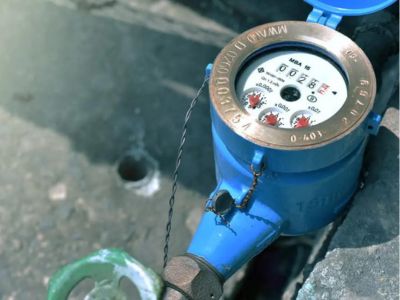
billsIf a household’s water bills have been unusually high lately, it could indicate a hidden leak. Even a small leak can lead to significant water waste and increased costs. While homeowners might attribute rising costs to various issues, it’s a red flag they shouldn’t ignore. When property owners notice their water bills consistently climbing, they must schedule plumbing repairs to diagnose the problem and avoid unnecessary expenses and potential damage.
Other Signs of a Water Leak

In addition to high water bills, there are numerous other signs of a leaking pipe. Some common symptoms can include:

  • Musty odors: A musty smell can indicate water damage, especially in areas not typically exposed to moisture.
  • Mold or mildew growth: Look for signs of mold or mildew, appearing as dark spots or patches.
  • Discolored water: If a home’s water has a strange color or odor, it could be a sign of a leak or other plumbing issue.
  • Wet spots or puddles: Check their floors, basement, and crawl spaces for signs of water damage.

When homeowners notice these signs, they must call a trusted local plumber for water leak repairs.

Use the Water Meter

water meterHomeowners can use their water meter to determine if there is a leak in their house. First, they should turn off all water-using appliances in their home. Then, they should check the water meter reading. If the meter continues to run, it indicates a leak somewhere in their plumbing system.
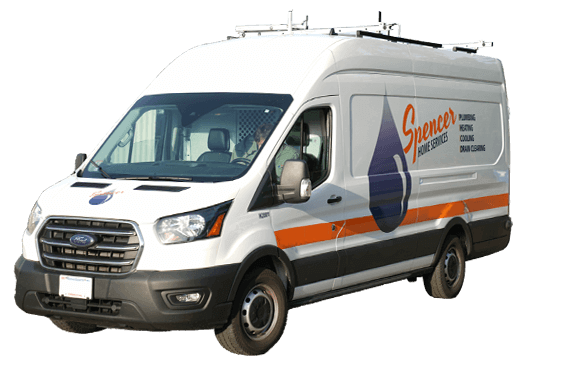
If the water meter runs, homeowners must schedule water leak detection services to determine whether there is a leak and where it is located.

About Spencer Home Services

When homeowners need to beat the heat, they must call Pete at Spencer Home Services. They offer instant mass savings rebates, 0% financing options, and industry-leading warranties. Call them today for water leak repair services in Peabody, MA.

Distribution Links +